 Finder
File
Edit
View
Go
Window
Help
Finder
File
Edit
View
Go
Window
Help
 Finder
File
Edit
View
Go
Window
Help
Finder
File
Edit
View
Go
Window
Help
Process Documentation · How Much Human? · 2026
February
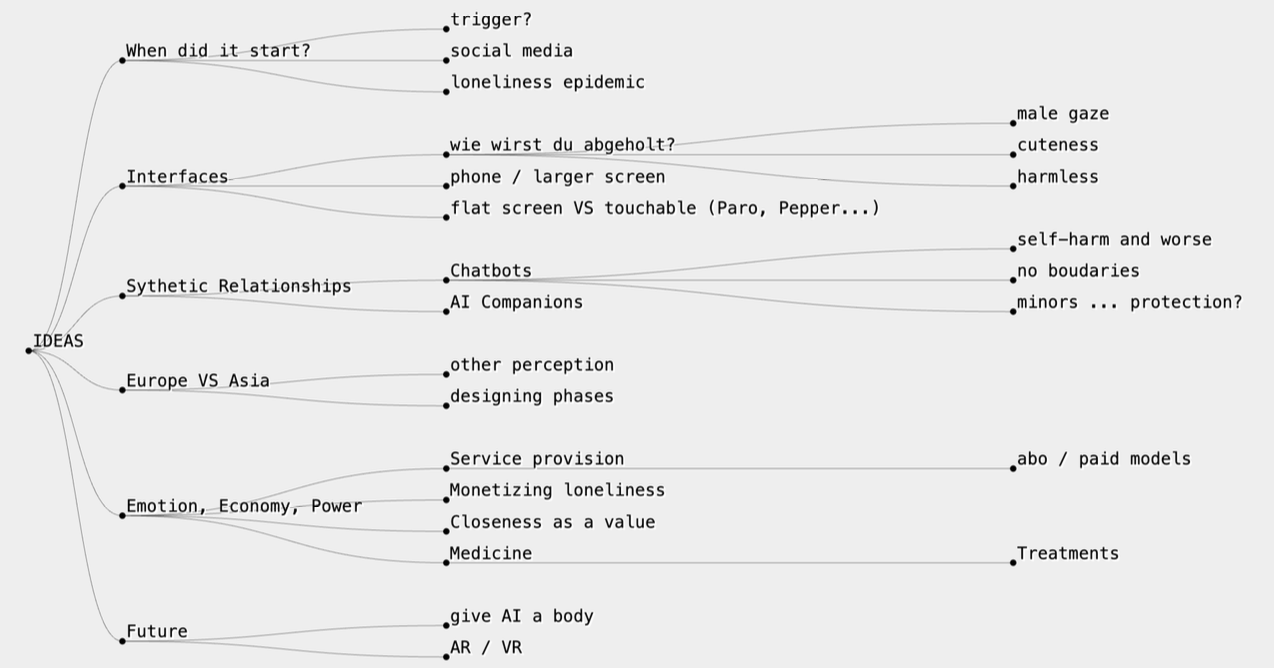
The project initiated in February with a dedicated kick-off week focused on ideation and conceptual exploration. Given that my thesis investigates contemporary developments in artificial intelligence, I chose to expand my contextual research within this field. My initial objective was to map existing AI projects to gain a comprehensive understanding of the current technological landscape and its creative possibilities.
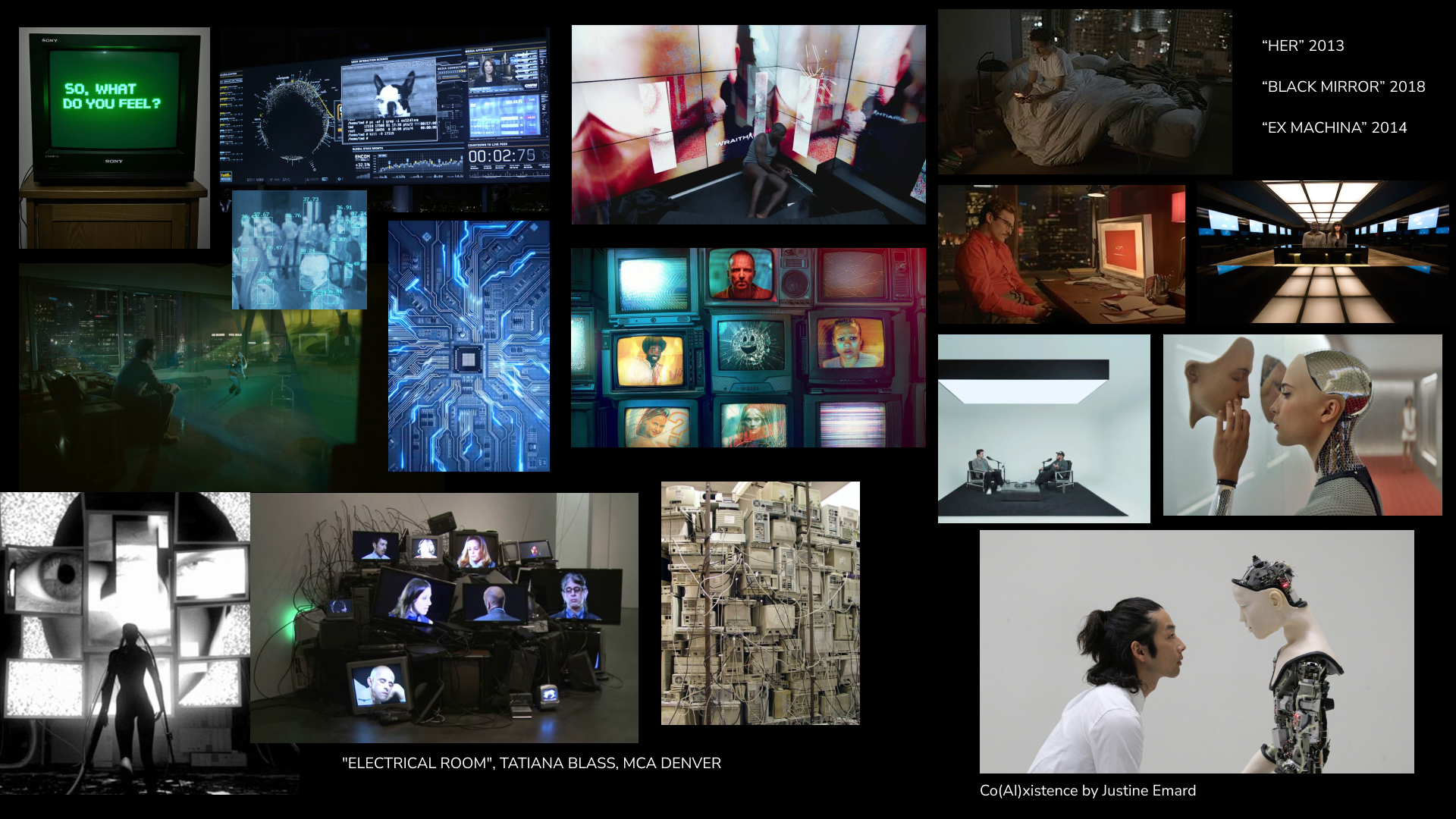
Consequently, I mapped out a thematic framework, deciding to focus my initial exploration on the intersection of digital relationships and technological intimacy. This research was subsequently translated into a visual moodboard, consolidating artistic installations, cinematic references, and cultural inspirations that informed the aesthetic and conceptual foundation of the work.
March
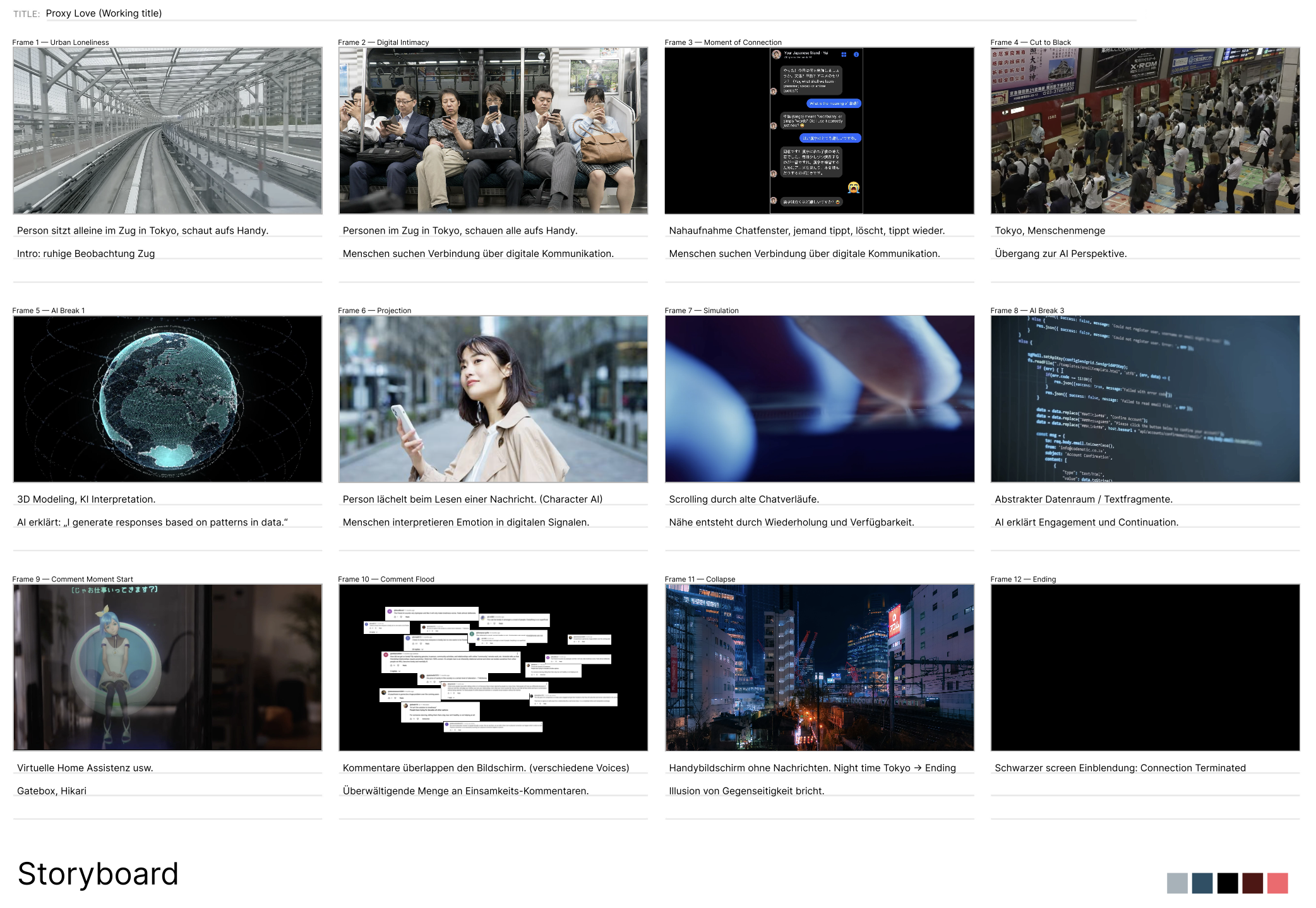
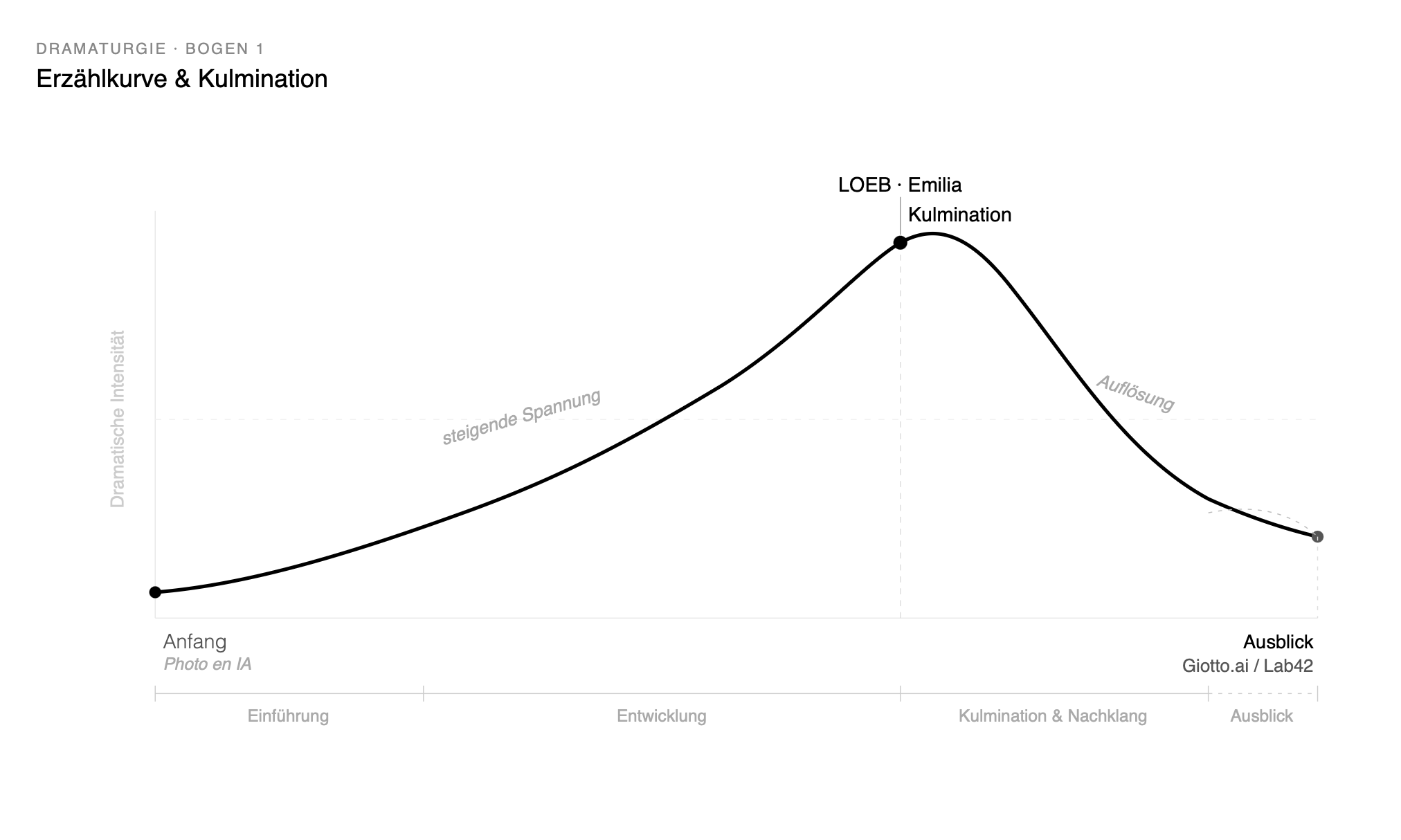
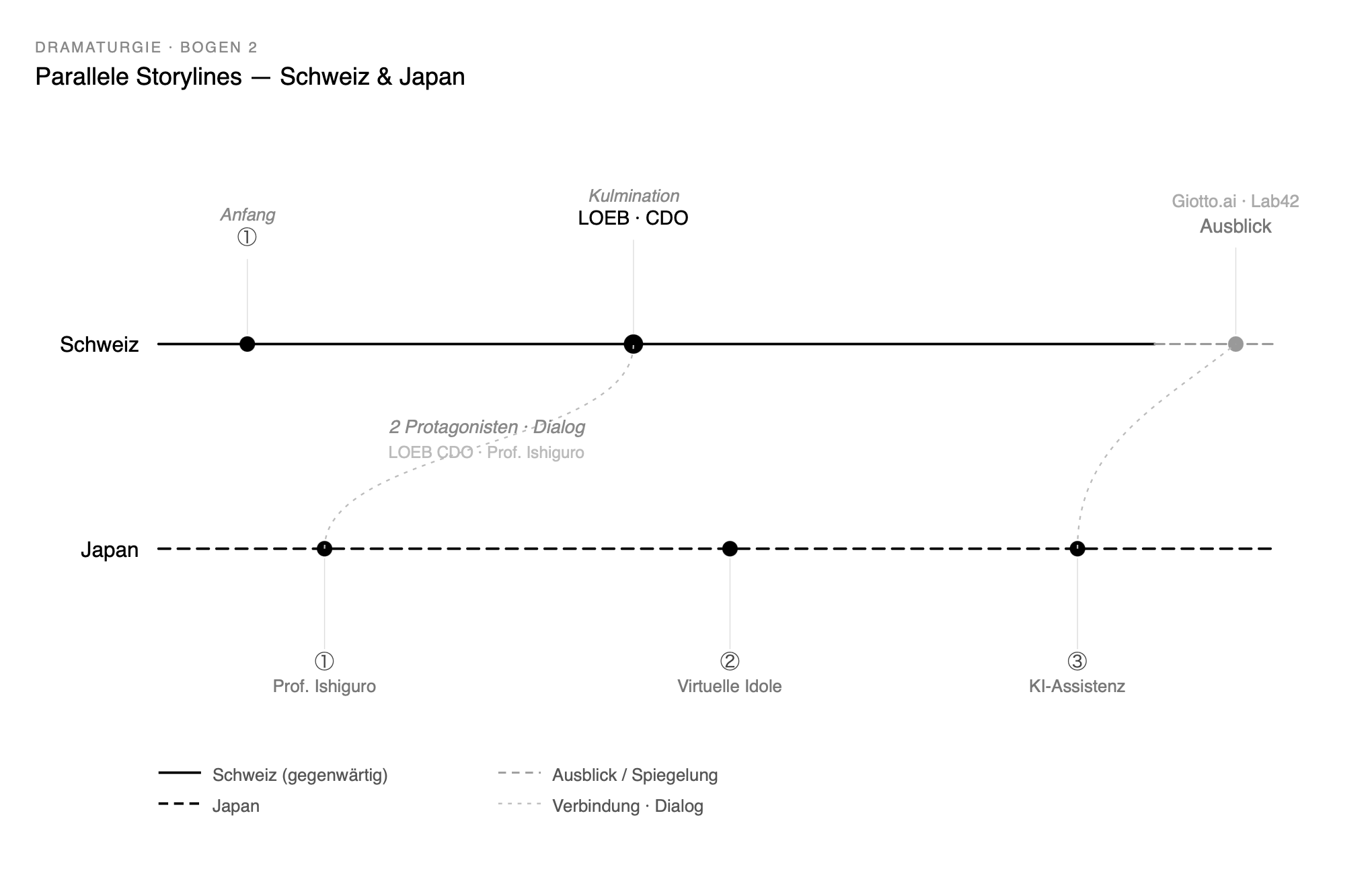
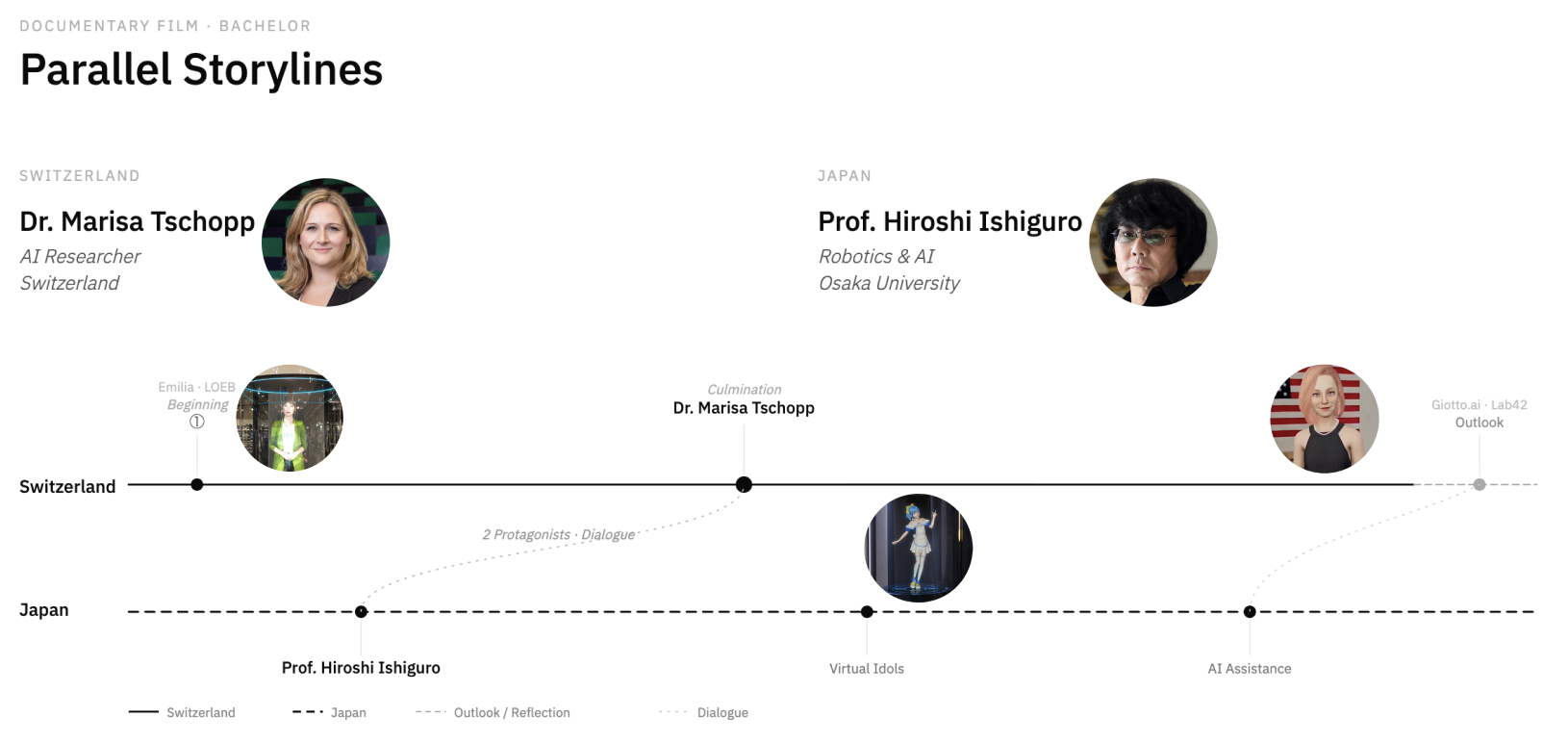
In March, the direction of the final project was finalized as a film, and I started structuring the storyline. My initial idea was to create a narrative with two parallel tracks, highlighting the cultural differences in how AI is perceived in Asia (focusing on Japan) versus Europe (focusing on Switzerland).
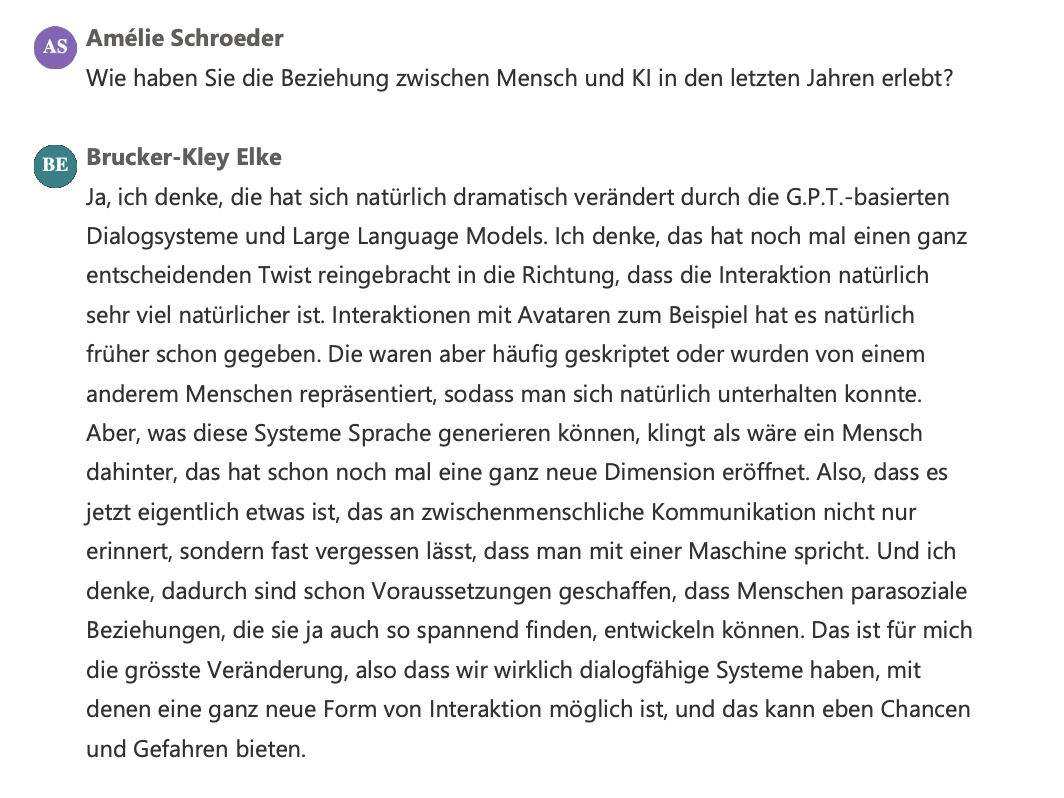
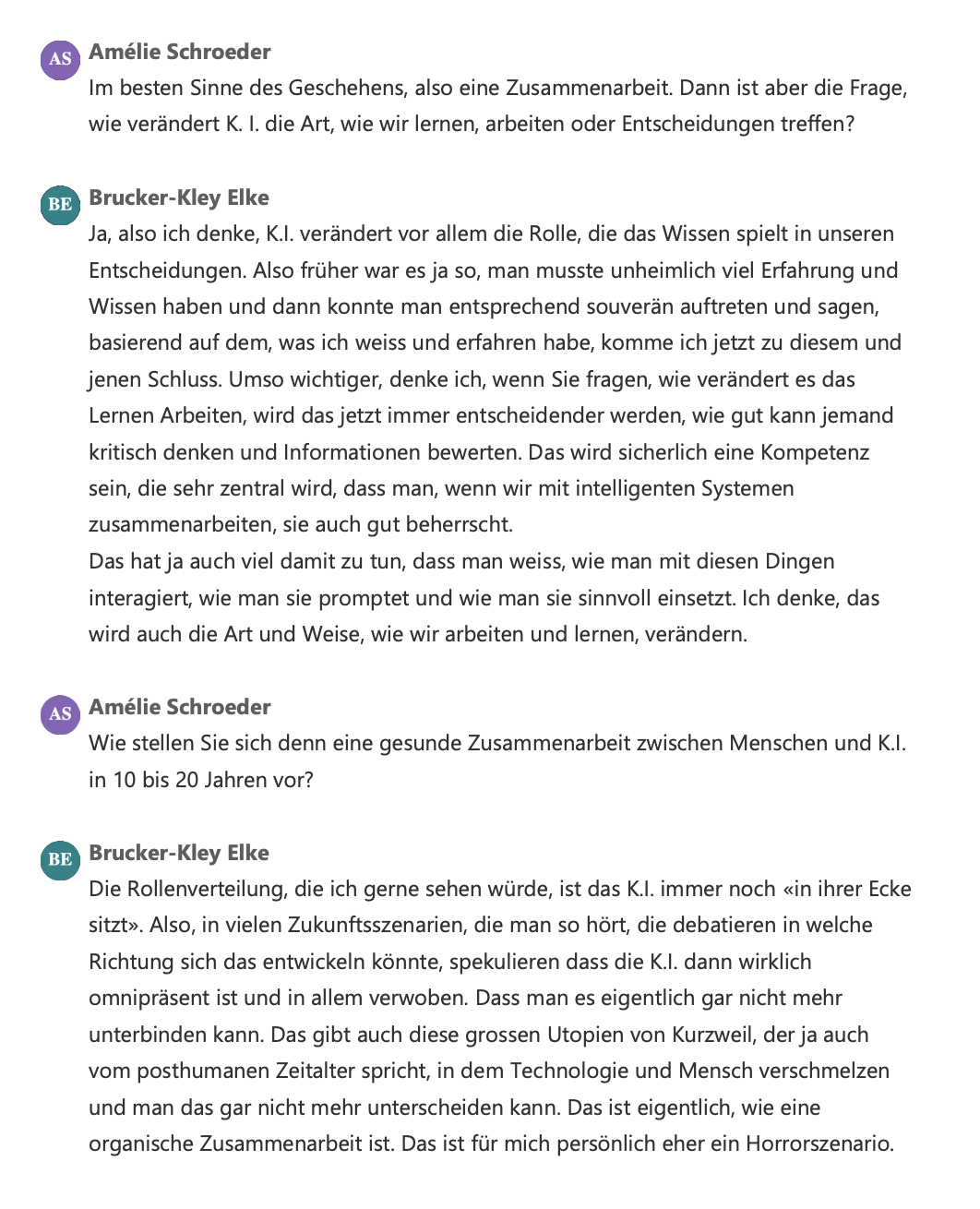
At the beginning of the month, I also interviewed Elke Brucker-Kley, a Lecturer and Researcher at the Zurich University of Applied Sciences (ZHAW). Grounded in the findings of this interview, I drafted the project's first structural storyboard.
April
Following the second advisory session with my mentors, I realized that my project should pivot. Rather than merely examining the relationship between humans and AI, it needed to investigate the nature of our own perception. The objective shifted toward creating a film essay that provides context while actively destabilizing the viewer's sense of reality, blurring the lines between the simulated and the real.
At this stage, I was still pursuing the comparative concept between Japan and Switzerland, looking for relevant interview partners and film locations. This research led to a collaboration with the LOEB department store in Bern, which featured 'Emilia', a holographic digital assistant that served as a compelling visual subject. The Chief Digital Officer (CDO) of LOEB, Mr. Stucki, kindly agreed to an interview, providing valuable insights into Emilia's integration, functionality, and public reception.
Interim Presentation 1
At the first interim presentation, I presented an initial trailer. The constructive feedback from this session prompted me to critically re-evaluate the film's narrative trajectory and question whether the cross-cultural comparison between Japan and Switzerland was truly essential to the project's core thesis.
May
In response to the feedback from the first interim presentation, I dedicated the month of May to several visual experiments, including working with a 3D avatar designed to project and mimic my own physical movements. My objective was to generate a sense of psychological dissonance through this synthetic protagonist. During this process, several options for the avatar emerged in my mind: making it the actual protagonist of the film, treating it as a technical study, or exploring other conceptual directions.
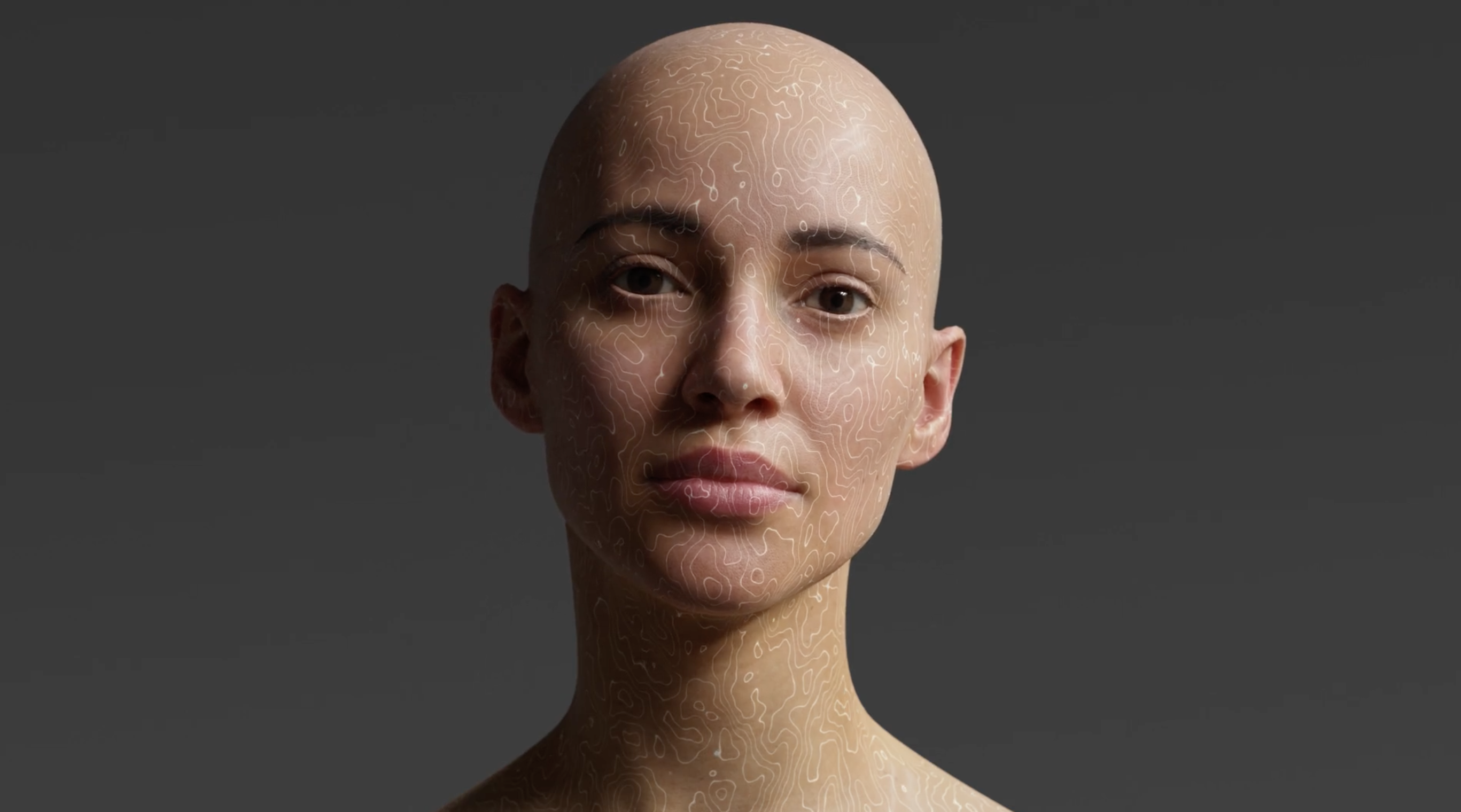
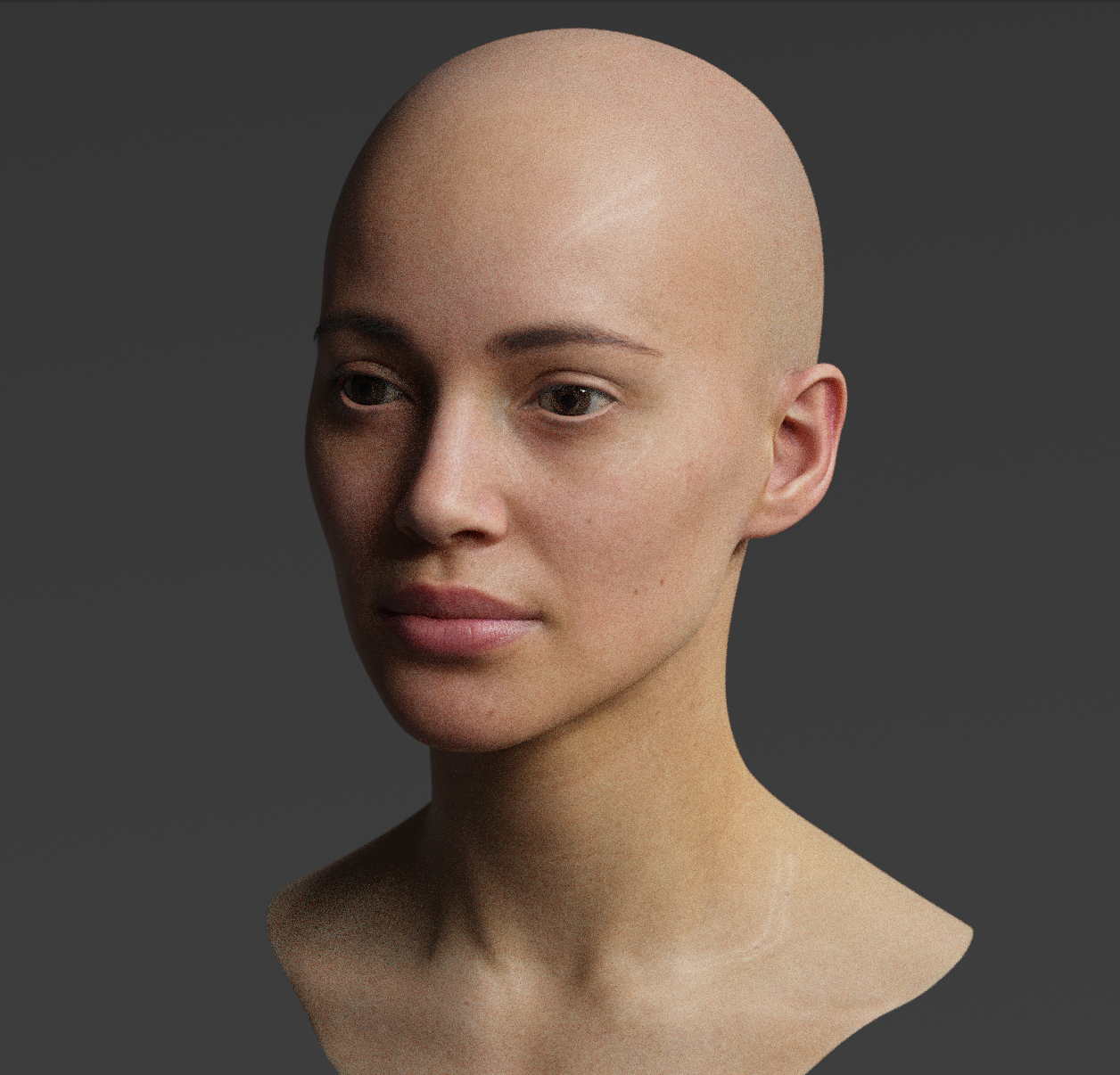
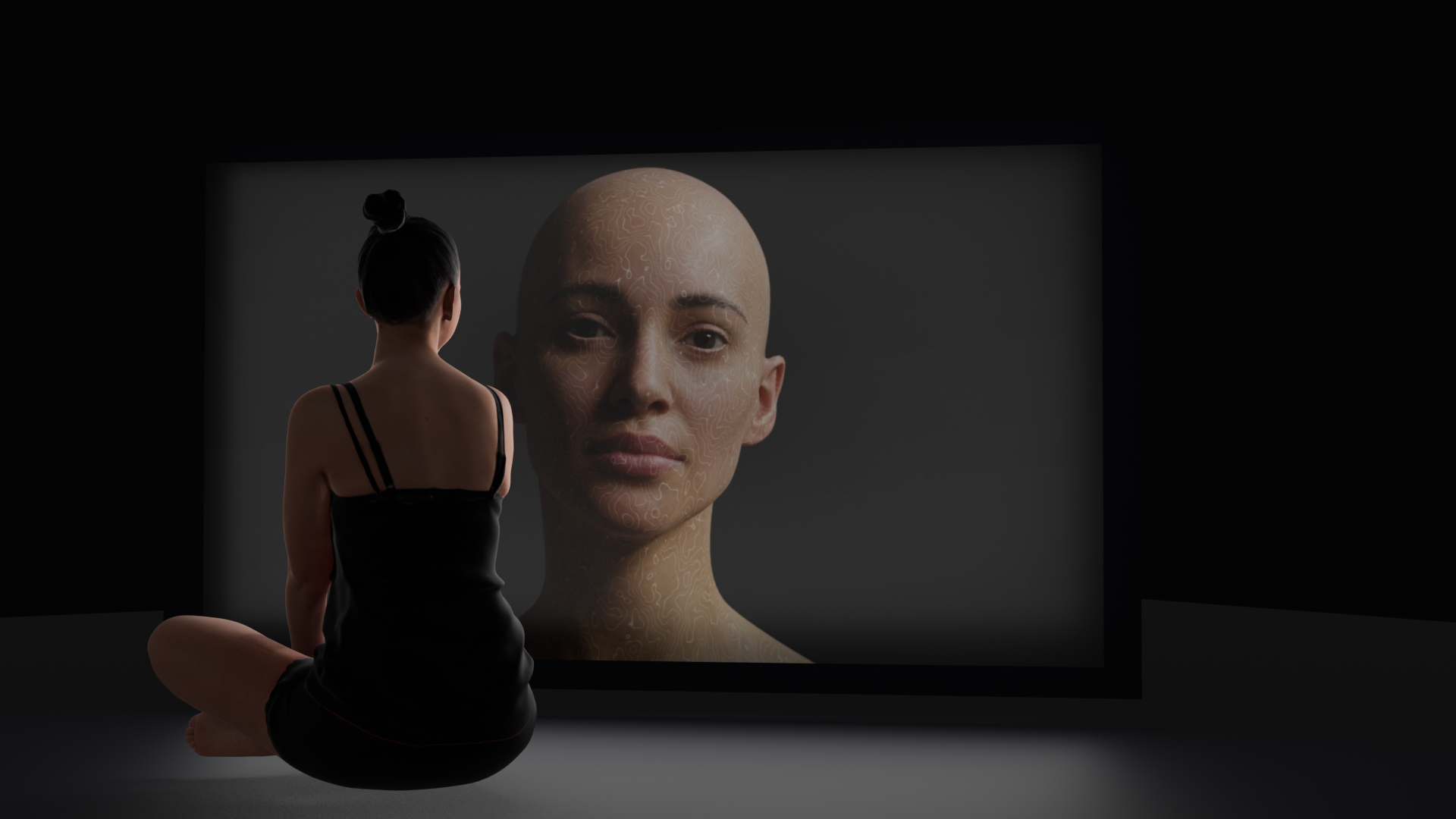
To develop this approach, I planned to conduct an interview with a large language model, which was intended to form the narrative spine of the film. Visually, I conceptualized this dialogue through a physical installation in a darkened space that would be filmed and lead to a literal confrontation and juxtaposition between the human and the AI avatar, positioned directly opposite one another.
Interim Presentation 2
During the second interim presentation, the feedback indicated that the 3D avatar induced confusion rather than enhancing clarity. Consequently, I decided to abandon the avatar approach. This allowed me to construct a more open narrative arc, giving me the freedom to directly convey my own reflections to the audience. I did not want the film to be the result of a doomsday scenario, but rather an appeal to humanity. In the best sense, the project aims to provoke the audience, stimulating a more critical and reflexive engagement with the media we consume daily.
June
In early June, I conducted a final expert interview with Dr. Marisa Tschopp, a researcher at scip AG. This conversation provided a valuable perspective on the psychological dimensions of my topic, allowing me to fully consolidate and refine the explanatory segments of the film.
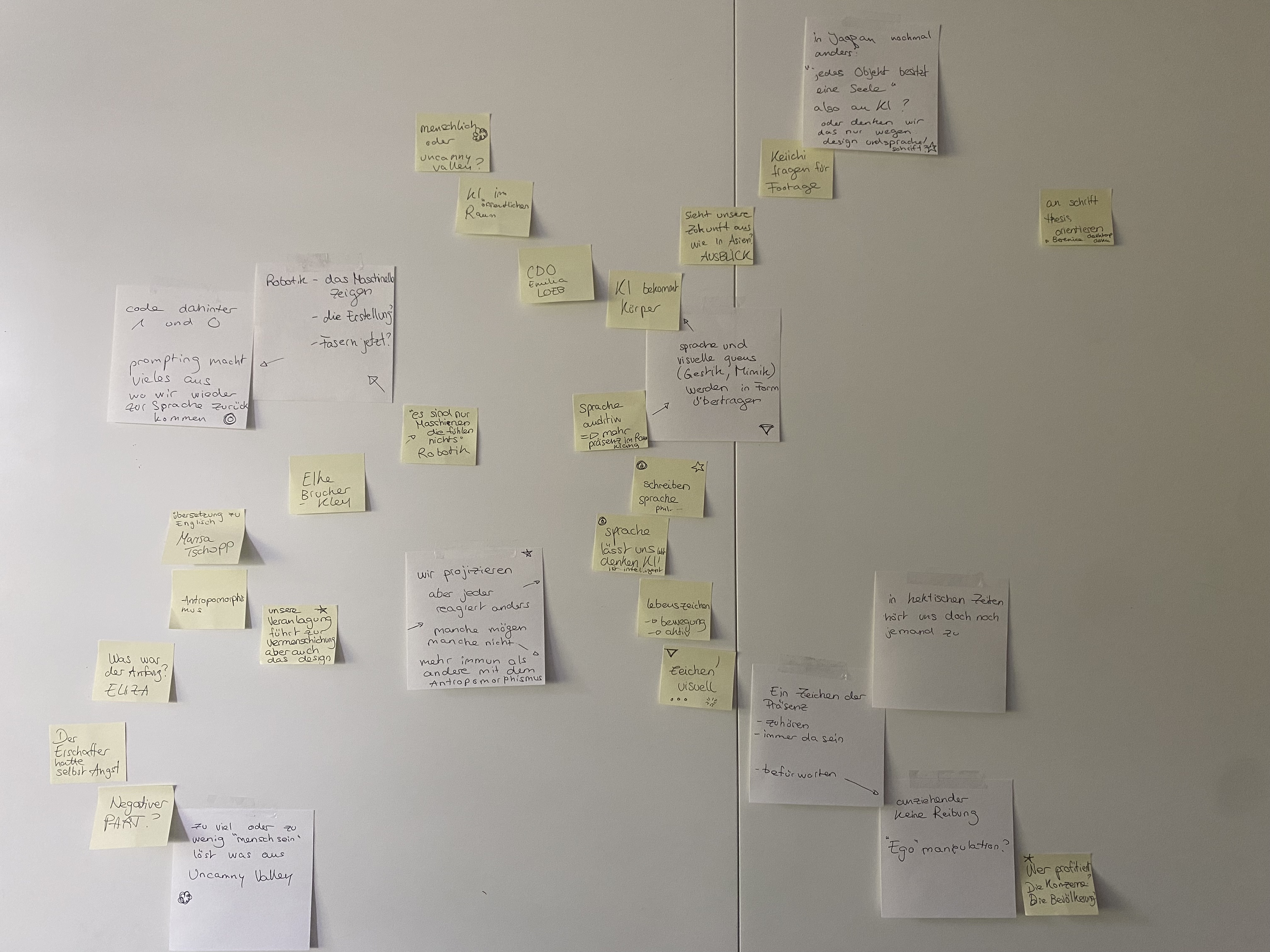
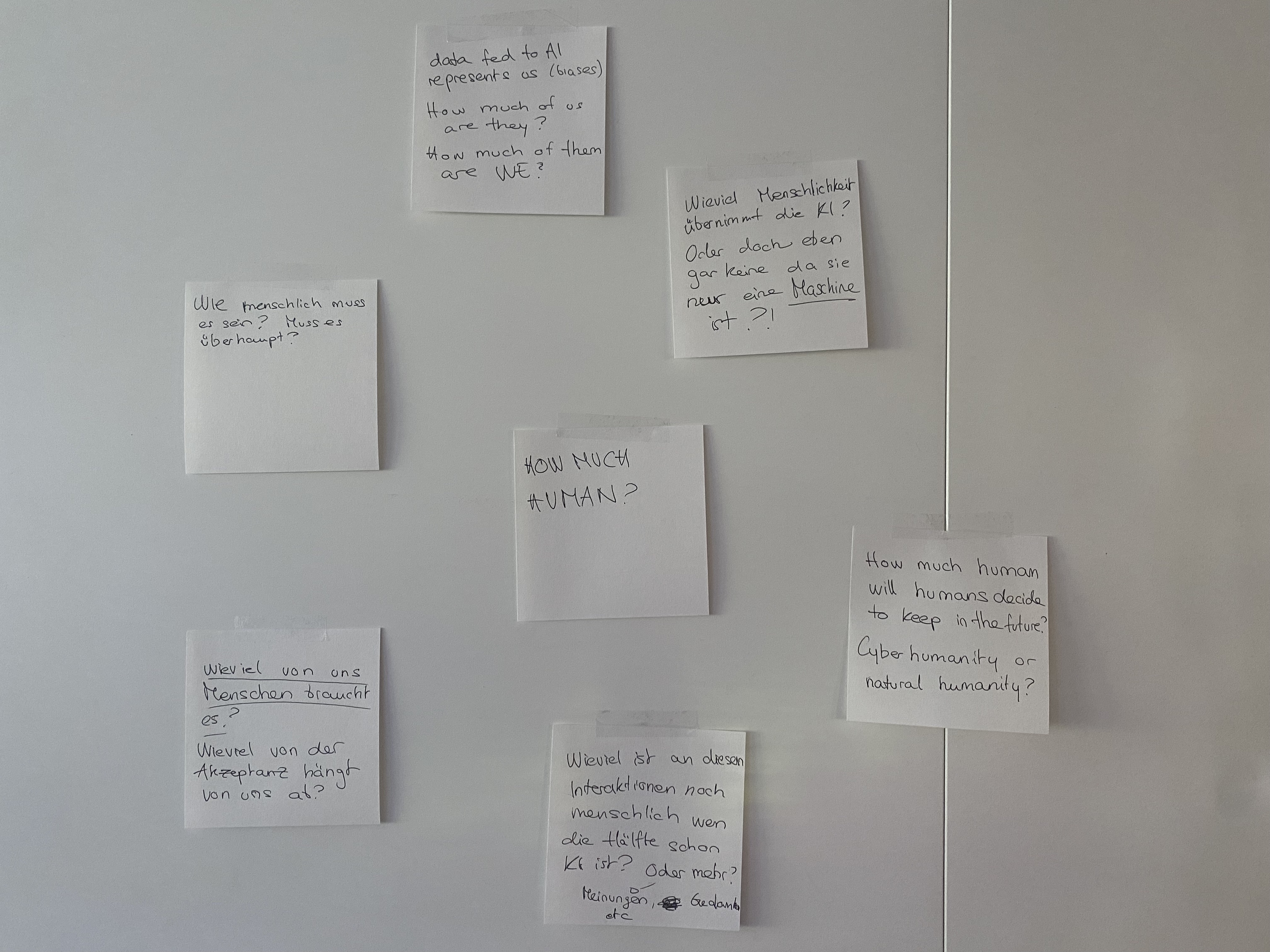
Throughout the various stages of the project, I accumulated extensive research notes. This synthesis of written reflections served as a crucial tool for translating my conceptual ideas first into a structured linguistic narrative, and ultimately into their final visual execution.
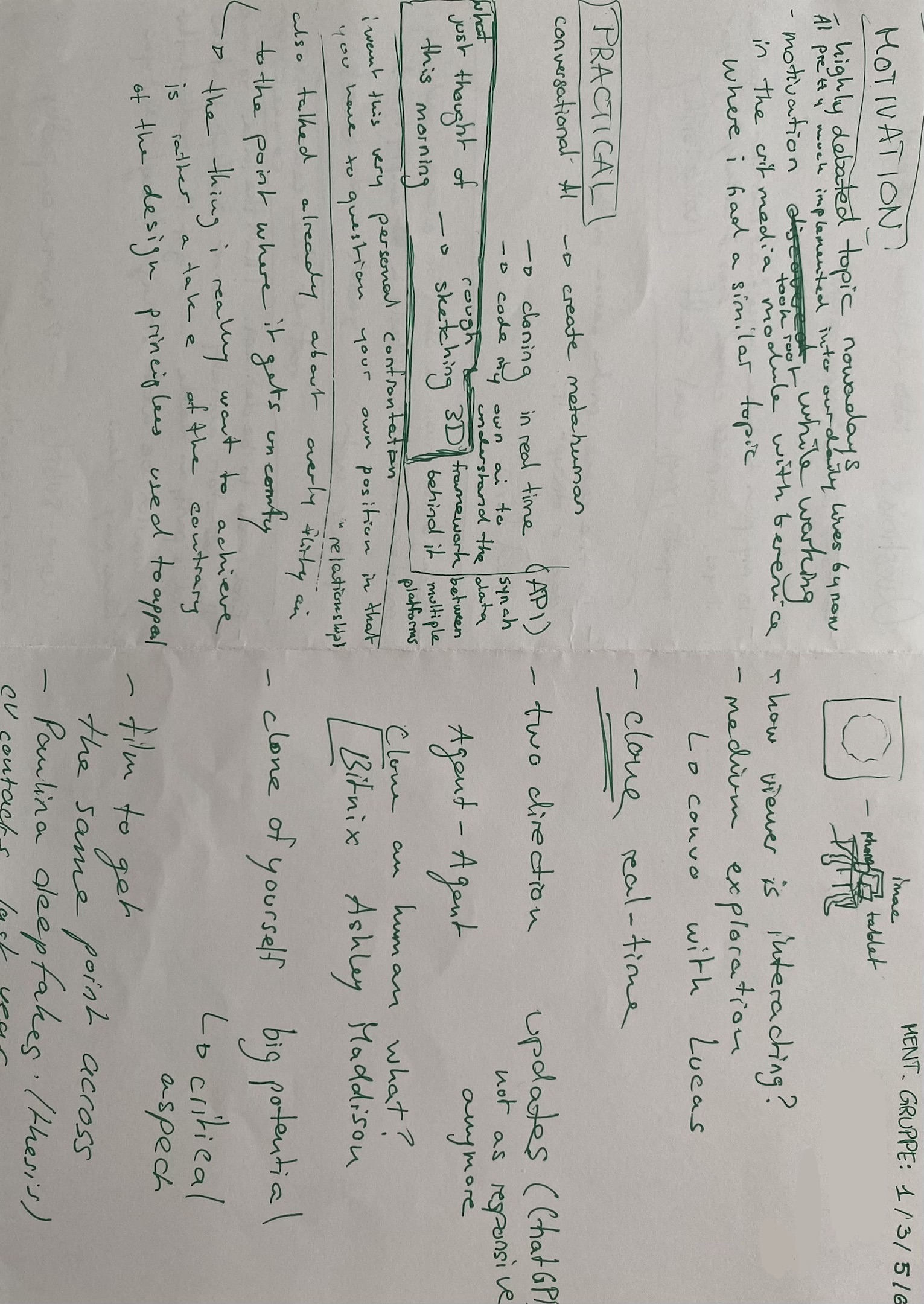
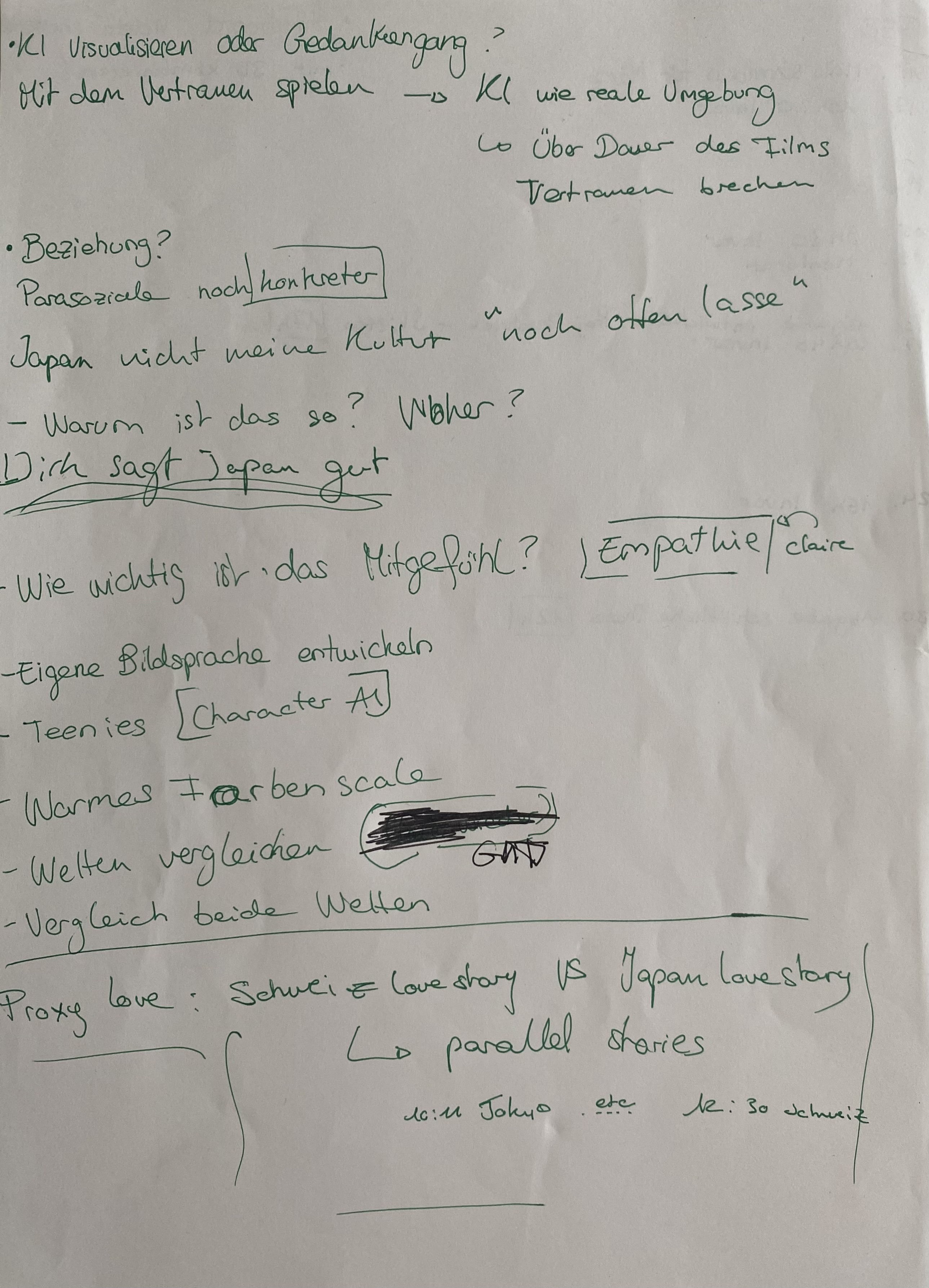
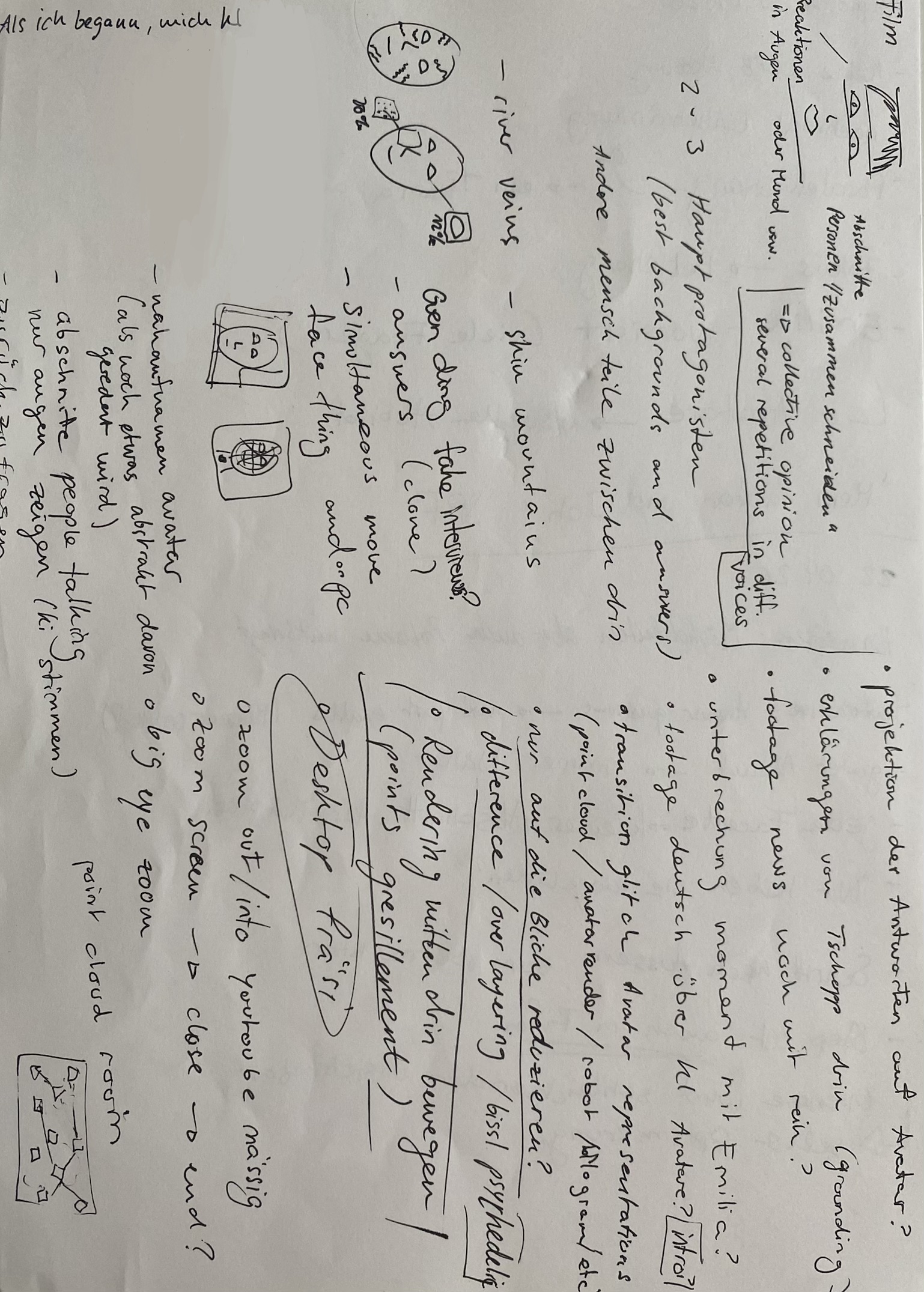
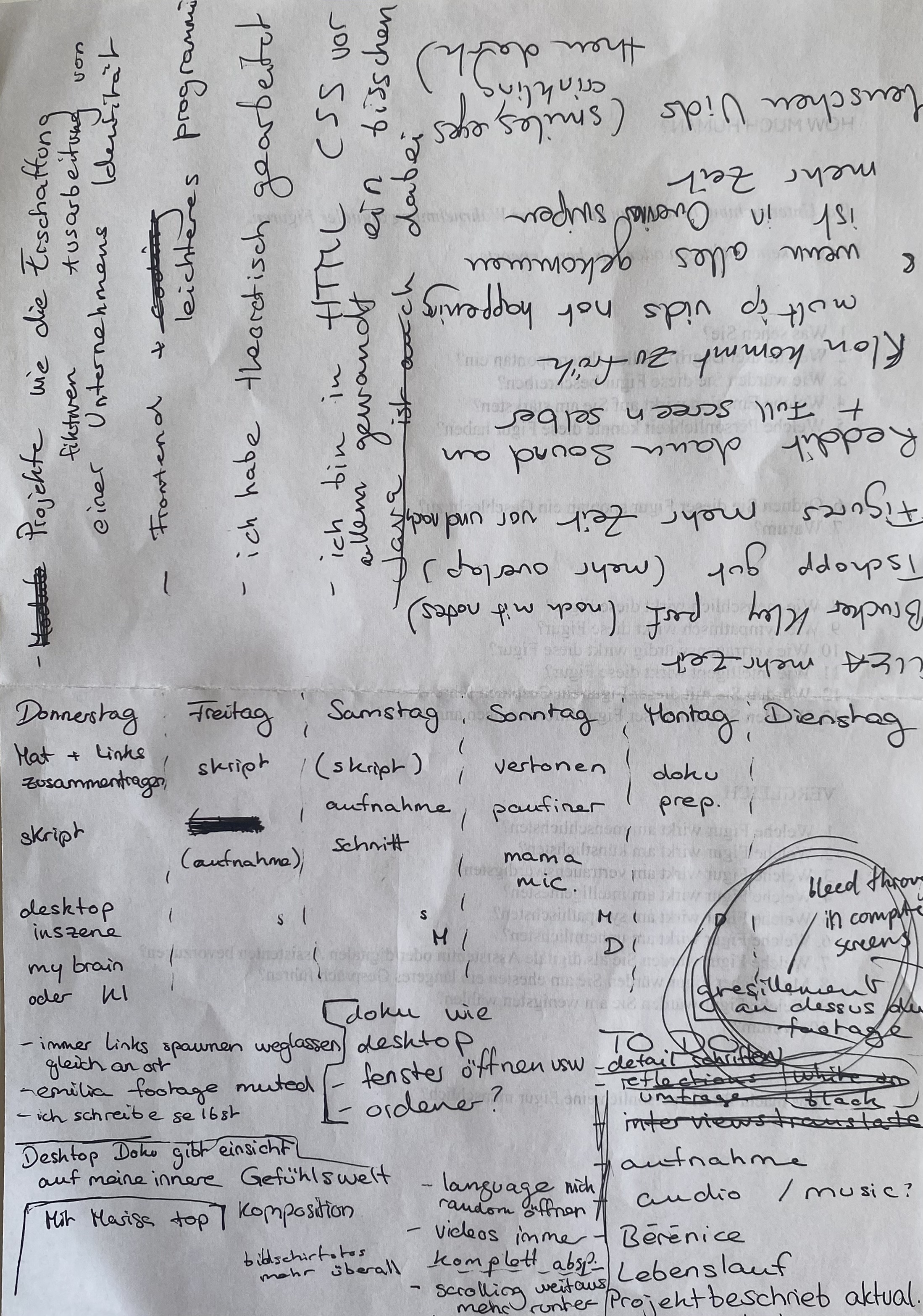
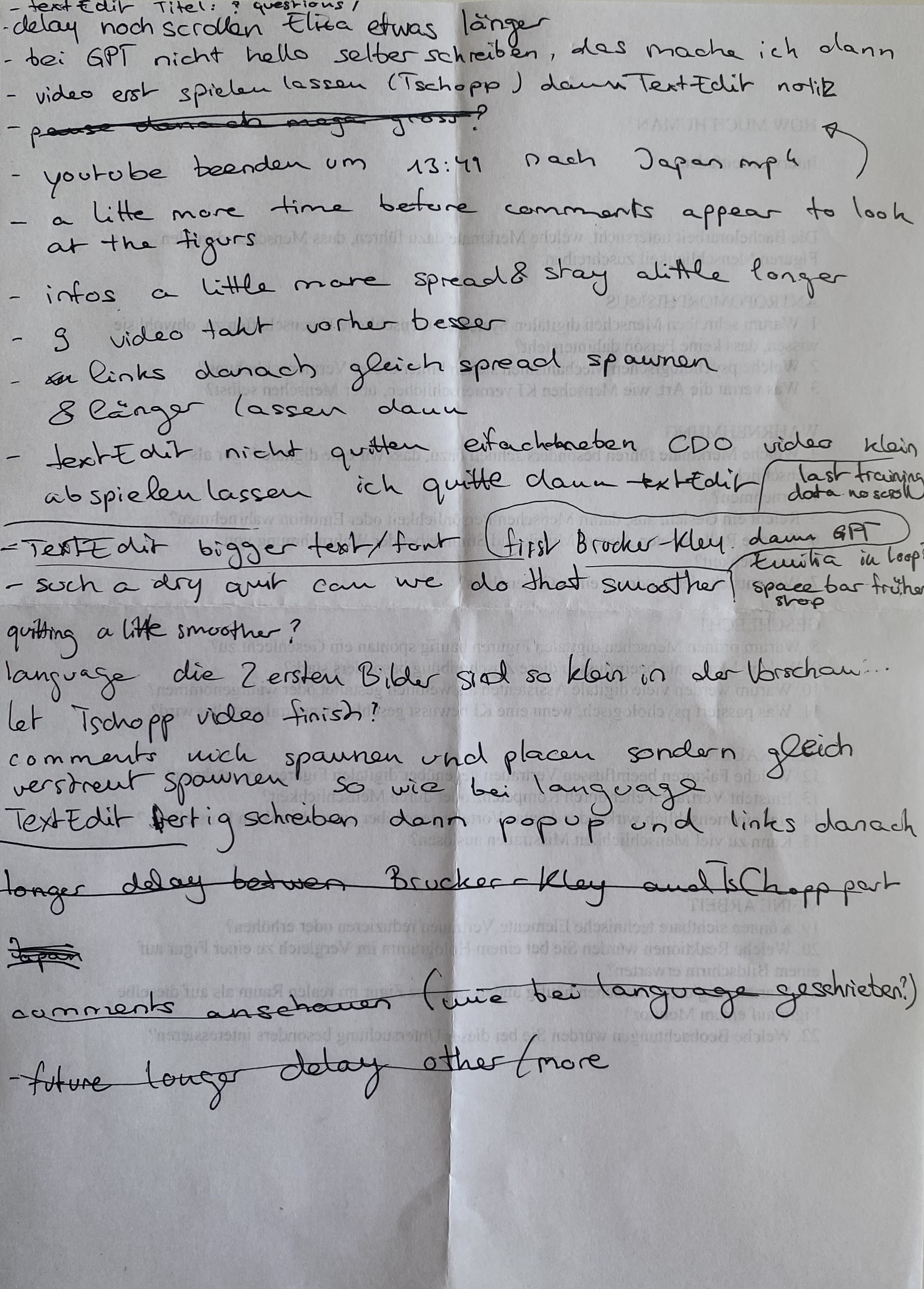
Armed with this extensive body of research, I commenced the production phase. Ultimately, I selected the desktop documentary format for my film essay, as it offered significantly more conceptual freedom than conventional cinematic structures. To organize my thoughts and synthesize the accumulated material, I constructed a physical, analogue storyboard wall. This spatial mapping allowed me to cross-reference my ideas and forge a cohesive, compelling narrative arc.
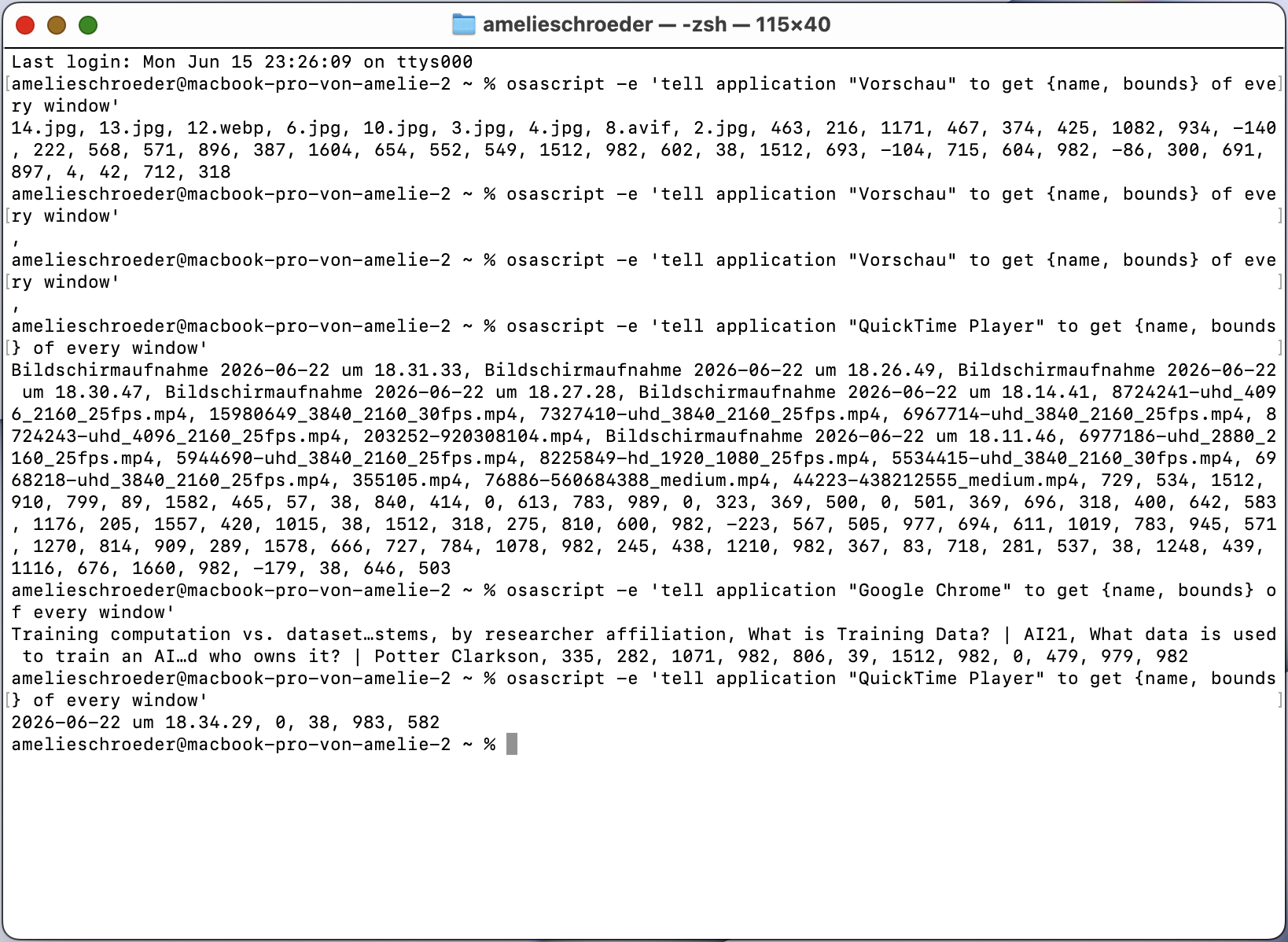
My final experiments with the gathered material involved leveraging AppleScript to visualize the rigid, unyielding progression of AI systems, highlighting the corresponding powerlessness of the user's cursor. Ultimately, this resulted in a dynamic tension between moments where the user retains full agency over the desktop environment, and segments where they are completely at the mercy of the automated scripts executing on the system.
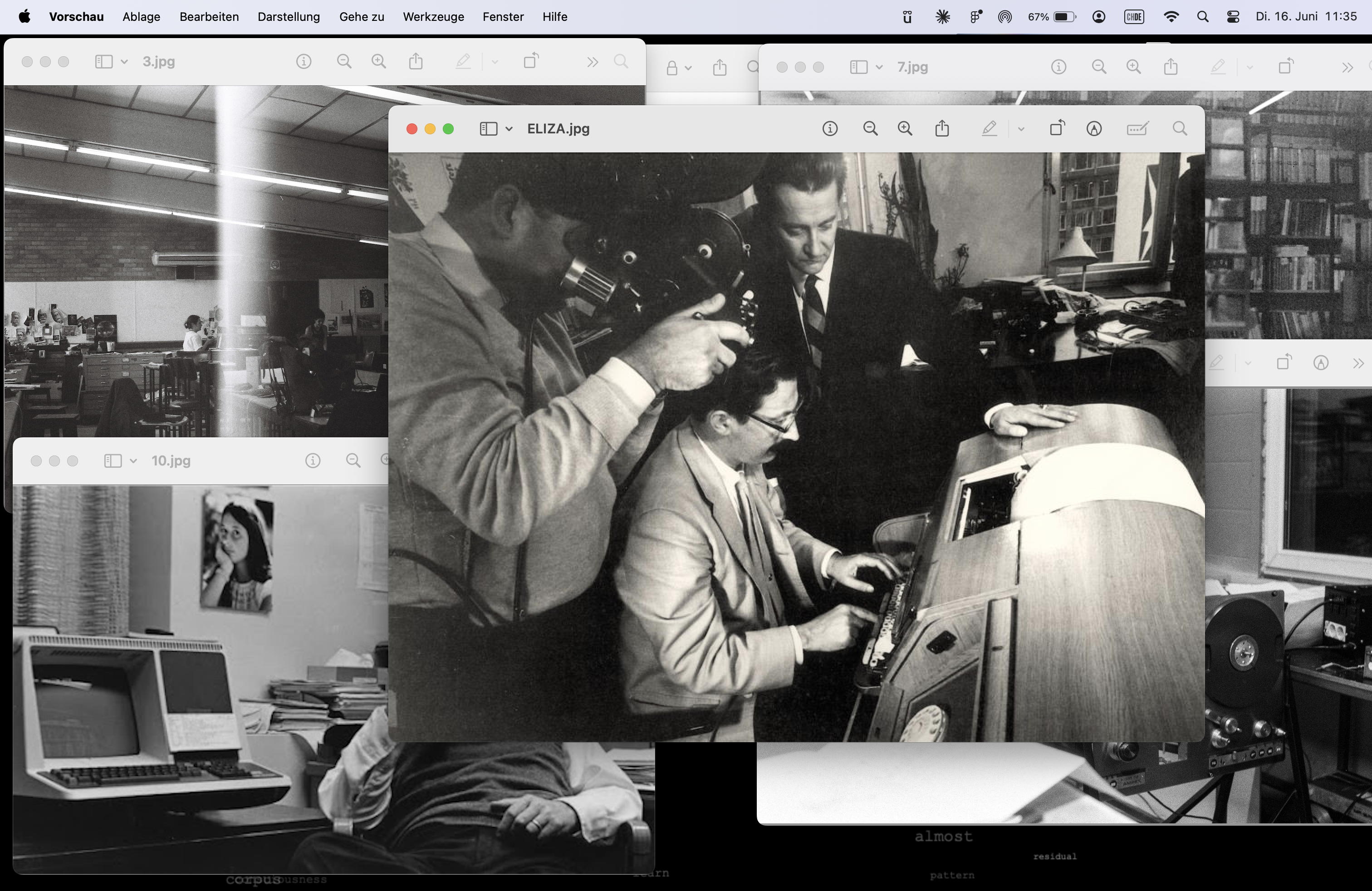
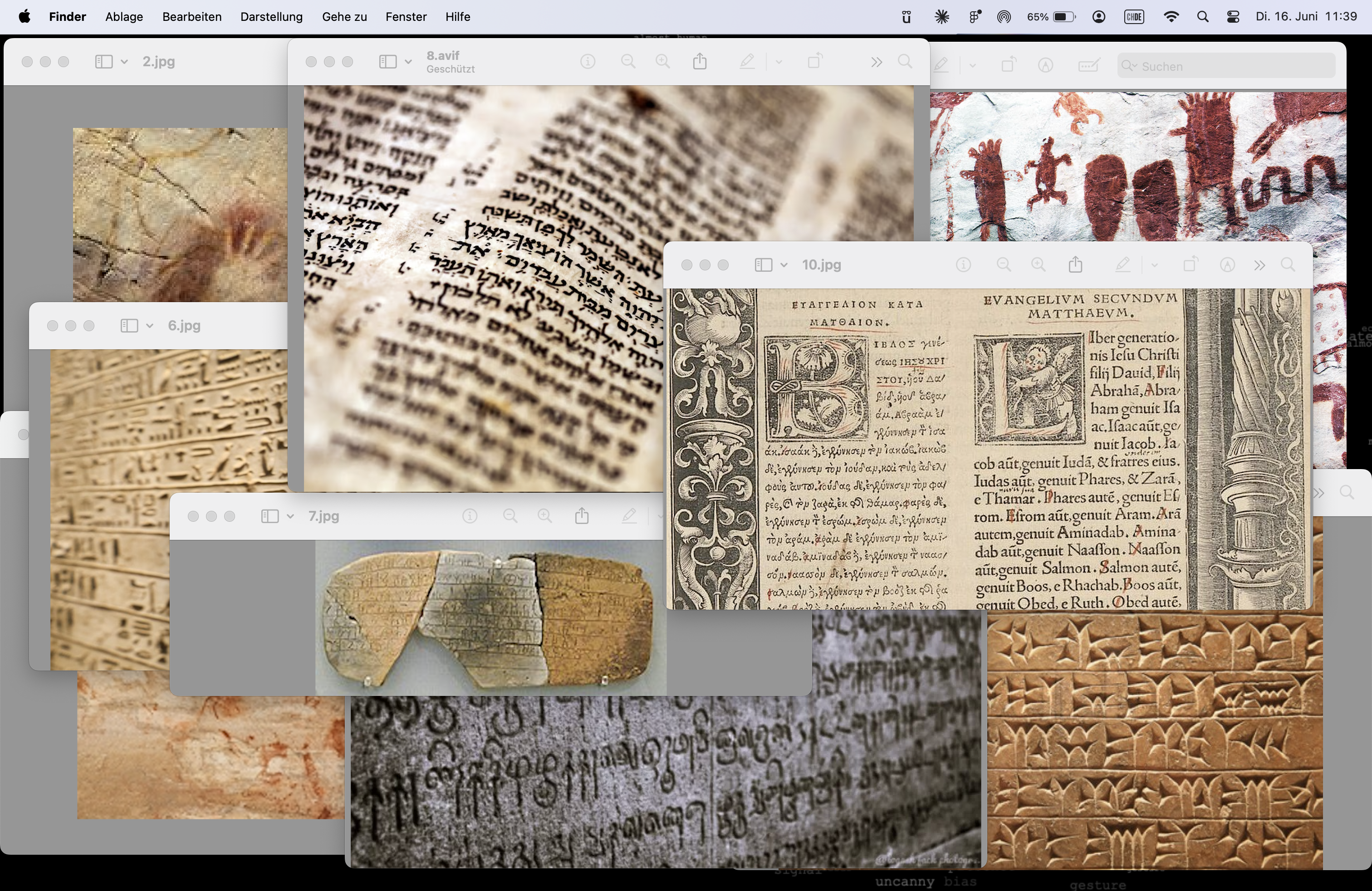
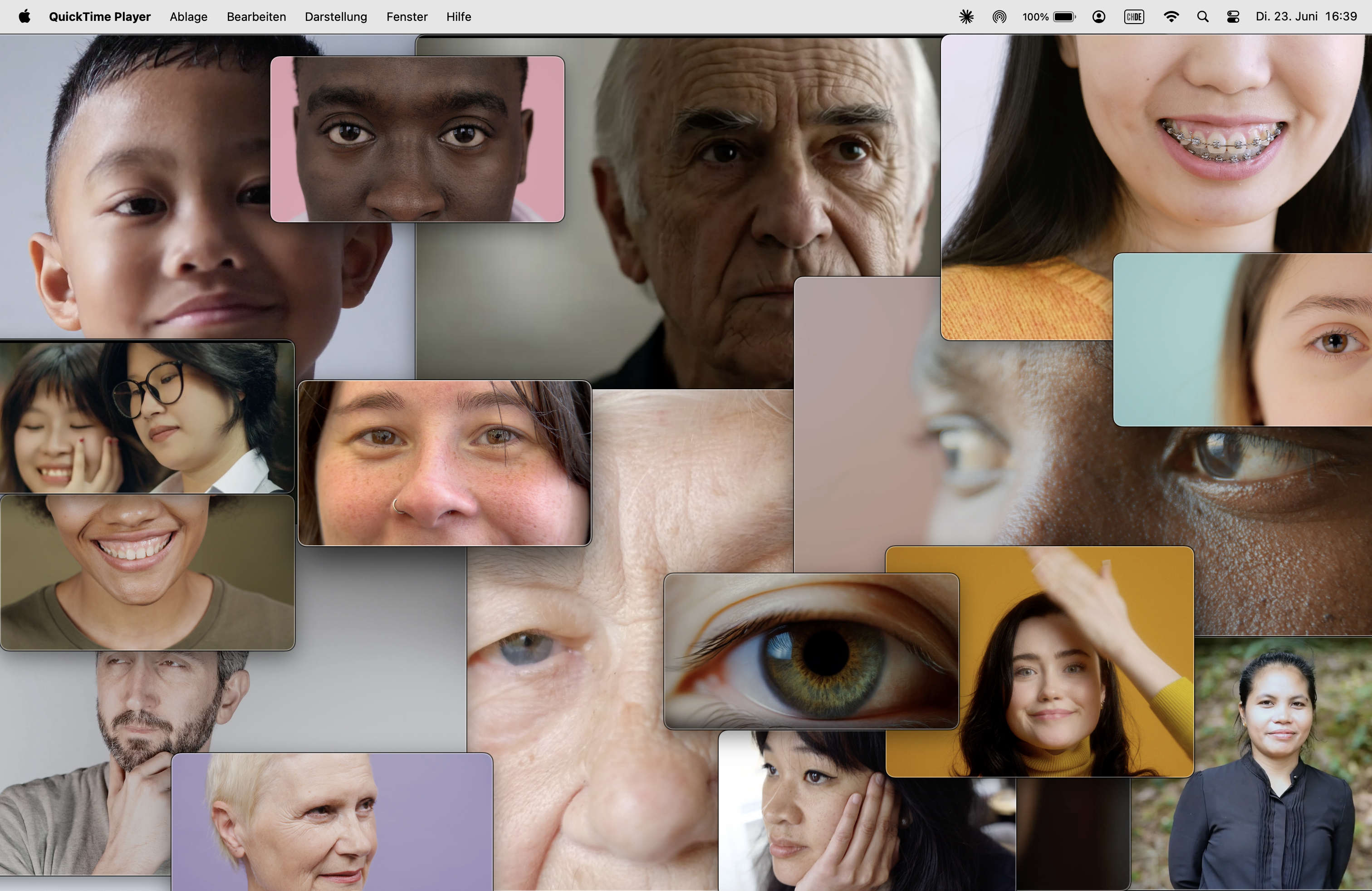
I also aimed to subtly visualize the 'blurring' and commodification of personal data. It is a well-established reality that our digital footprints are continuously harvested and sold in massive aggregates to AI corporations as training datasets, often buried deep within the fine print of terms of service agreements.
To translate this phenomenon into a visual metaphor, I utilized datamoshing to seamlessly bleed individual video frames into one another. Datamoshing involves the intentional corruption of video data by manipulating the underlying I-frames (intra-coded frames), thereby disrupting the structural compression of the digital image.


Project Description · Amélie Schröder · 2026
Topic and Research Question
The central question is how much of the human is embedded in artificial intelligence, and conversely, how deeply AI has already penetrated our perception, our thinking, and our communication. This leads to a more fundamental inquiry: in an era of synthetic voices, generated faces, and machine-produced language, can we still trust our own perception? What does it say about us that we tend to humanise machines, even when we know exactly what they are?
Relevance
With the spread of AI-generated content, digital avatars, and deepfakes, the boundary between the human and the machine is becoming increasingly blurred. The social relevance lies in the resulting crisis of perception: the signals humans have relied on for hundreds of thousands of years (voice, facial expression, language) are now being replicated and optimised. What does authenticity mean when the signs of the real can be learned?
Motivation
The project grew out of personal experiences with AI tools. The fascination lies in the observation that the boundary between human and machine is less technical than perceptual, and that this boundary is actively shaped by design.
Design Thesis
The aim is to produce a desktop documentary: a screen recording in which the desktop itself becomes the camera and the stage. The subject is explored through real interactions with AI systems, video clips, archival material, and an AI clone of the author. As a visual device, the desktop progressively breaks down over the course of the film: glitch effects, stacked windows, and visual layering reflect the growing loss of trust in one's own perception.
Acknowledgements
Special thanks to:
My parents, who have always supported me.
Invar-Torre Hollaus, for supervising my cultural history thesis.
All the people on the internet who asked my questions before I did, and all those who answered them.
My mentors: Dirk Koy and Claire Reymond.